Improve a workflow.
Find the rework, test a promising idea and decide what is worth building.
Data & AI Workflow Diagnostic · $750 fixed Deep Well LabsStart a conversation
Consulting + independent research + engineering
Trust needs a way to check.
AI is becoming part of how we read, decide and act. Useful adoption starts with clear boundaries: what information a tool can reach, what it may do, and where a person needs to stay involved.
The same four things, kept apart: what you said, what the AI did, what you allowed, what came back.
We help small businesses examine one workflow, understand the access around it and choose a practical next step. The aim is less friction, clearer responsibility and AI that supports the work people need to do.
Browse the Offering LibraryFind the rework, test a promising idea and decide what is worth building.
Data & AI Workflow Diagnostic · $750 fixedReview what selected tools can read, share or change, and where approval belongs.
AI Exposure & Control Diagnostic · $750 fixed-price pilotConcerned about an external exposure? Explore the scoped audit and hardening pilots.
Checking is not a metaphor. These documents say how a record can be shown unaltered, what the evidence does and does not prove, and the rule that keeps research questions out of product claims.
How fingerprinting, linked entries, and external witness records can make changes to a record detectable. The brief explains the approach and its limits, including the window between witness records. It describes tamper evidence, not a promise that alteration is impossible.
Read document : Chronicle Integrity BriefA technical companion for readers who want to check integrity evidence. It identifies the export's SHA-256, dates, timestamp authority, verifier exit code, and conformance corpus, making the verification claims specific enough to inspect rather than asking the reader to accept them.
Read document : Chronicle Verification Technical BriefHow Deep Well Labs separates research questions from product claims. The charter distinguishes what exists from prototypes, simulations, frontier work, and speculation, and describes the evidence a research capability needs before it can become something Origo claims to deliver.
Read document : Deep Well Labs and Origo Boundary CharterPersonal Knowledge Infrastructure
Notes, recordings, documents, and AI conversations preserve different pieces of a person's thinking. Personal Knowledge Infrastructure asks how those pieces can remain useful as tools change.
Our questions concern continuity, authorship, privacy, and trust. Our research explores what could become possible; product claims must describe what can be delivered now.
Our research posture is deliberate: publish the question, preserve the evidence, and keep concepts visibly separate from implemented capability.
How can a person's thinking remain coherent across tools, models, and time?
The original human record must stay distinct from every machine interpretation.
Useful AI should be able to move across commercial, regional, and self-hosted environments.
Provenance, custody, and consent should be visible in the product, not buried in policy.
Each program states its standing and its stage. A listing here is not a finding.
Can a person check, outside the system that produced it, that a Chronicle record has not been altered? One chain of 264 preserved entries was published and then checked with a separate tool on 3 September 2026. The export route is founder-operated, and the evidence is tamper-evident, not tamper-proof.
The company's foundations, technical briefs, and research direction. Some documents are available on request; most remain working drafts rather than settled positions.
A practical workflow for keeping original notes alongside AI interpretation, reviewing changes in meaning, and preserving the connection when you move tools. Includes an illustrative example and sources. A draft explainer for review, not a report of a completed experiment.
Why Deep Well Labs exists and what it means to build infrastructure for human thought. The thesis argues for preserving what people intentionally express, retaining its provenance, and keeping people in control of what machines may infer from their record.
The company's founding convictions and the ethical commitments that follow. Its Christian foundation is company character, not a requirement of anyone using its products. The document commits Deep Well Labs to respecting each person's worth, agency, and freedom of belief.
How Deep Well Labs separates research questions from product claims. The charter distinguishes what exists from prototypes, simulations, frontier work, and speculation, and describes the evidence a research capability needs before it can become something Origo claims to deliver.
How fingerprinting, linked entries, and external witness records can make changes to a record detectable. The brief explains the approach and its limits, including the window between witness records. It describes tamper evidence, not a promise that alteration is impossible.
A technical companion for readers who want to check integrity evidence. It identifies the export's SHA-256, dates, timestamp authority, verifier exit code, and conformance corpus, making the verification claims specific enough to inspect rather than asking the reader to accept them.
What science knows, disputes, and does not know about human thought. This working survey separates evidence from speculation across cognition and memory research. It begins with a central limitation: there is no scientific consensus on what a single thought is.
The argument for a personal record that survives changes of model and vendor. The thesis states Origo's intended invariants and labels claims by evidence class, helping readers distinguish an established finding, an implementation, a hypothesis, a model, and an ambition.
Available on request : The Continuity ThesisThe boundaries governing AI authority across Origo products. AI must preserve human agency, remain distinct from source records, and avoid claiming ultimate, spiritual, or divine authority. The guardrails also protect the role of trusted relationships and qualified professional care.
Available on request : Human Agency and AI GuardrailsThe research themes Deep Well Labs considers worth investigating, and how an idea may become a question, evidence, and eventually a decision. The roadmap makes clear that research does not automatically become implementation: a theme may be narrowed, rejected, or remain exploratory.
Available on request : Research RoadmapResearch, made concrete.
Origo is being built around those four things, kept in order over time, as an attributable thinking sequence: human source, machine contribution, human response, further machine contribution, and human decision. The aim is to return to the reasons behind a decision and continue thinking across sessions and models, with human expression, AI output, and explicit adoption kept distinct.
Origo is in private alpha and not yet generally available.
The web alpha implements capture, retrieval, and saved source-linked answers. The complete resumable sequence and full provider attribution are in development.
Pocket Chronicle for iPhone targets November 2026 and has not launched. Development builds have encrypted local capture, search, declared relationships, optional on-device labels, and confirmed book references. There is no account, backend, or cloud synchronization. Explicit book lookup sends only a query and selected book ID to Open Library. The local Ask experiment is in progress; its planned answers are session-only, not the durable Origo sequence.
Origo is a product of Deep Well Labs, Inc.
Explore Origo and Pocket ChronicleIllustration This is a diagram of how Origo separates a person's own words from anything a machine derives from them: the first two of four things kept apart, what you said and what the AI did. Origo and Remis Office are being built to keep the other two, what you allowed and what came back, apart in the same way. It is not a product screenshot and does not depict a real record.
I want somewhere trustworthy for a thought to land before it disappears.
Possible connection: continuity matters first at the moment of capture.
Alongside Origo, we are developing tools for remembering, exploring Scripture and governing AI use. Each has its own purpose and stage of development. Shared principles do not mean shared data.
Deep Well Labs, Inc. is the company. Origo is its flagship product; Pocket Chronicle is its separate iPhone experience, and Remis Office is an Origo product. Via Lumina Reader and Places focus on Scripture. Watchtower and Aether address AI use in different settings.
Read the stage labels: Private alpha and development builds are working software, not a public release. Release preparation does not mean App Store availability. A demonstration shows an experience; proposed products and concepts are not available services.
iPhone · In development
Keep your thoughts and their original context close at hand. Family Chronicle is a storytelling experience inside Pocket, not a separate app.
Explore PocketAn Origo product · In development
Being built for the errands you delegate to an AI assistant, with what you asked, what you approved and what was attempted kept distinct.
Meet Remis OfficeiPhone · Release preparation
A free Bible reader for focused, offline reading. Its reading library is separate from Pocket Chronicle; no shared account or record is implied.
Explore ReaderiPhone demonstration · Proposed product
Explore the places behind Scripture. Bible Places Today is its proposed weekly edition; richer lenses and church-leader kits remain proposed.
Discover the Places directionmacOS · In development
Being built to answer one question: did any AI activity on your Mac happen while nobody was asking? Leads with the Presence Sensor, plus First Contact and Standing Grants. Observe-only, local-only, nothing blocked.
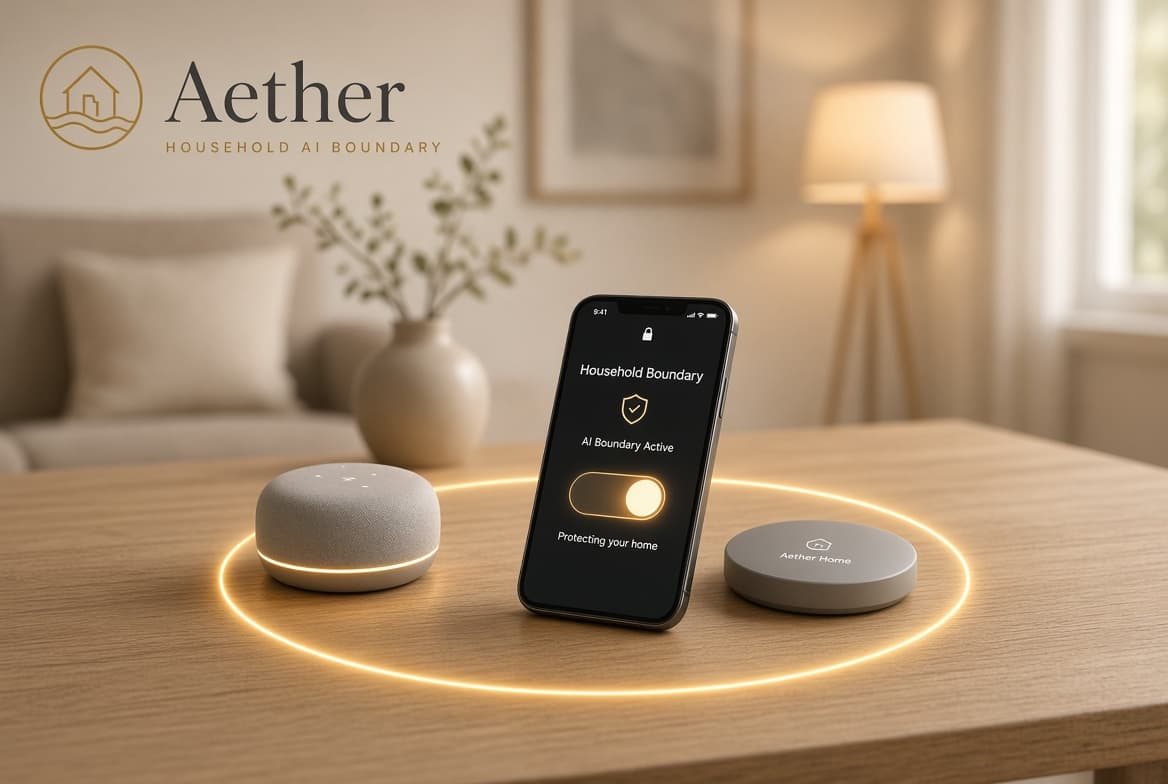
Understand the distinctionHousehold AI boundaries · Proposed concept
 Aether
A calmer way to choose when AI belongs in daily life. Quiet Hours, family controls and phone/home coverage are ideas under exploration, not available protection.
Govern AI use
Govern AI Use names a shared need, not a single app or connected service. Watchtower explores visibility into AI activity. Remis Office is in development; its prototypes use simulated errands to explore explicit authority for delegated work. Aether is a proposed concept for household boundaries. Observing, authorizing and filtering are different responsibilities; no single product is being presented as doing all three.
Across this work, the aim is better collaboration with a traceable record of four things kept apart: what you said · what the AI did · what you allowed · what came back. Coverage and evidence limits must remain visible. These products do not share a backend or automatically exchange personal records.
“Origo began with a personal need: somewhere for thoughts to go when the mind would not slow down.”
Deep Well Labs grew from the larger question of how people can preserve and continue their thinking without surrendering ownership, authorship, or control.
This is not about outsourcing thought. It is about giving thought somewhere trustworthy to land.
Trust is not a settings screen. It is the architecture, the interaction, and the visible boundary between a person and every inference made about them.
What a person actually said is the source. Everything derived from it must remain visibly derived.
AI may help find patterns and possibilities. It does not silently become the author of the record.
A person's accumulated knowledge should not become captive to whichever model or vendor is fashionable this quarter.
The system should reduce burden at capture and compound understanding as the record grows.

For business owners, researchers, builders, and long-horizon partners.
Deep Well Labs is working at the intersection of cognitive science, knowledge infrastructure, human agency, and AI systems. Serious conversations are welcome.
Bring a workflow, an access question or a research problem. We welcome practical conversations about better interactions between people, AI and business systems.
09 / STAY CONNECTED
Occasional updates on Deep Well Labs research, experiments, and what we're building.